Quick answer
- When it applies: the European Accessibility Act has applied to e-commerce services provided to consumers since 28 June 2025. (Directive (EU) 2019/882)
- Shopify stores: a store where a customer can browse, choose a product and check out sits in the directive's description of e-commerce services. You remain responsible even if someone else built the site. (ACM, e-commerce guidance)
- Stores outside the EU: a store in Australia or the UK that sells to customers in EU countries can be in scope. Whether yours is depends on how and where you sell.
- Microenterprises: there is a real exemption for service providers that employ fewer than 10 people and have annual turnover of no more than EUR 2 million, or a balance sheet total of no more than EUR 2 million.
- The standard people use: the current harmonised reference is still EN 301 549 v3.2.1, which is built around WCAG 2.1 Level AA. A newer version that adopts WCAG 2.2 has been published, but as of 21 November 2026 it has not been cited in the Official Journal.
- A widget or a scan: these can help you reduce barriers and find common issues. They do not make a store meet the EAA, and they do not protect you from legal claims.
If you run a Shopify store and you sell to customers in the EU, it is worth knowing what the European Accessibility Act covers, who may be exempt, and what you can usefully do next. This article is general information for store owners. It is not legal advice, and it is not a ruling on whether your particular store is in or out of scope. If you need a decision for your business, speak to a lawyer who knows the Member States you sell into.
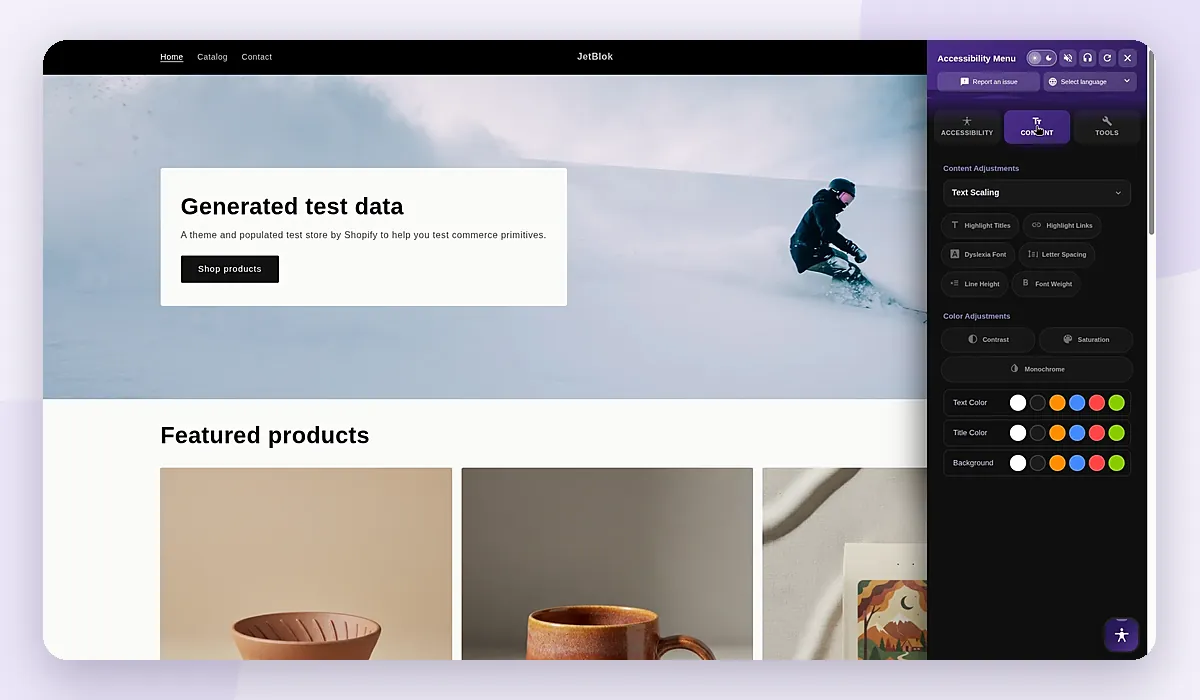
What is the European Accessibility Act?
The EAA is an EU directive, officially Directive (EU) 2019/882. The European Commission describes it as a way to make accessibility rules more consistent across EU countries, for a defined list of products and services. E-commerce is on that list. The legal text is on EUR-Lex.
Member States had to write the directive into their own national law, so a Dutch store faces Dutch enforcement and a German store faces German enforcement. The date that matters for services is the same: services provided to consumers after 28 June 2025.
Does the EAA apply to a Shopify store?
The directive defines e-commerce services as services provided at a distance, through websites and mobile device-based services, by electronic means, at the individual request of a consumer, with a view to concluding a consumer contract. A typical Shopify store, where someone can browse, choose a product and check out, sits in that description.
The Netherlands Authority for Consumers and Markets (ACM), which enforces the rules for e-commerce in the Netherlands, says the duty covers the path to concluding an agreement: searching, choosing, logging in and paying. You remain responsible even if you hired someone else to build the site. See ACM's e-commerce guidance.
You do not have to be based in the EU for this to be relevant. The directive defines a service provider as a person who provides a service on the Union market, or who makes offers to provide such a service to consumers in the Union. A store in Perth or Manchester that sells to customers in EU countries can be in scope. Whether yours is depends on how and where you sell. Get legal advice if you need a firm answer. Australian and UK stores should also read our guides to website accessibility in Australia and website accessibility in the UK, which are separate legal frameworks.
Who is covered by the microenterprise exemption?
There is a real exemption for microenterprises that provide services. In the directive, a microenterprise employs fewer than 10 people and has annual turnover of no more than EUR 2 million, or a balance sheet total of no more than EUR 2 million.
Both parts matter. The "or" is between turnover and the balance sheet, not between staff numbers and money. A five-person store with EUR 3 million in turnover is not a microenterprise under this definition. ACM puts it this way: if you have 10 or more people, or turnover above EUR 2 million, or both, your e-commerce service must be accessible. Even if you are exempt, accessibility still matters to customers, and other countries' laws can still apply if you also sell at home.
What does "accessible" mean under the EAA?
The directive sets functional requirements in its Annex I. For websites and apps, EU bodies point to the harmonised standard EN 301 549. The version currently cited as the harmonised reference is still EN 301 549 v3.2.1, recorded on the Commission's page on Web Accessibility Directive standards. That version is built around WCAG 2.1 Level AA, plus some extra ICT requirements.
A newer version, EN 301 549 v4.1.1, was published in September 2026 and adopts WCAG 2.2. AccessibleEU notes that it is not yet the legal reference for the EAA, because it has not been cited in the Official Journal. As of 21 November 2026, that remains the case. A newer WCAG version is not automatically the legal benchmark until it is written into a cited harmonised standard. ACM still points to WCAG 2.1 Level AA, and already recommends working to WCAG 2.2 so you are not redoing work later.
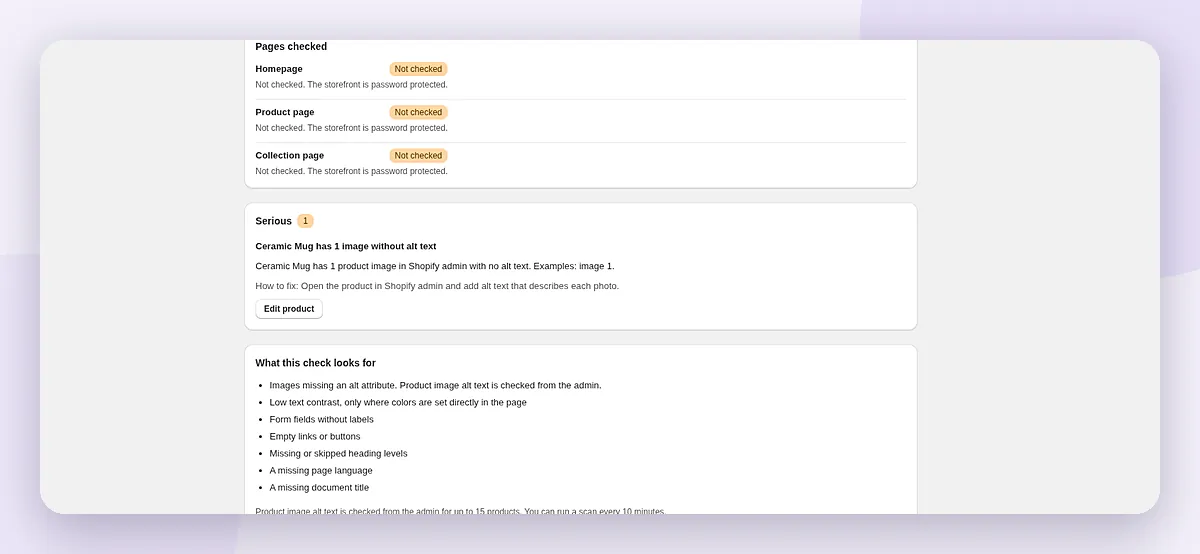
In store terms, that usually means useful alt text on product images, enough contrast on text and buttons, labelled forms, a checkout that works with a keyboard, sensible headings and a page language, and a way to pause motion. A widget or a scanner can help you reduce barriers and find common issues. Neither one makes a store "EAA compliant". The directive also allows a documented "disproportionate burden" assessment in defined cases. That is a formal assessment, not a reason to ignore the work. Service providers also have to publish information about how the service meets the requirements. An accessibility statement can support that work. It is not a certificate.
What has enforcement looked like so far?
In March 2026, ACM published a check of about 100 of the largest Dutch online stores. It reported that 61 percent were not digitally accessible in the sense that a person using assistive technology could not place an order, and that 33 percent had serious problems that made ordering much harder. ACM said the worst performers would be asked to improve, and that companies that do not make sufficient improvements risk enforcement action. See ACM, 24 March 2026.
In Germany, the joint market surveillance body MLBF already receives reports of barriers under the BFSG, which has applied since 28 June 2025. The German statute sets administrative fines of up to EUR 100,000 for certain breaches when a service is offered or provided without meeting the rules (§ 37 BFSG). That is the legal maximum, not a report of a fine already issued to a named shop. As of late November 2026, we have not found an official public report of a fine already levied on a named online store under these rules.
What can Shopify merchants do next?
If you sell into the EU, or think you soon will, this is a sensible order of work. It is a starting list, not a compliance programme.
- Write down where you sell, and whether you meet the microenterprise definition. If you are unsure, get advice.
- Walk your own checkout with a keyboard, and with the screen zoomed. Try a product page, a collection, the cart and payment.
- Fix the basics in your theme and catalogue: product image alt text, form labels, contrast on buttons and prices, heading order, and a language set on the page.
- Check third-party apps on the storefront. Your checkout still has to work.
- Publish an honest accessibility statement, with a way for people to contact you, and update it when the store changes.
- Re-check after theme edits, app installs and sales.
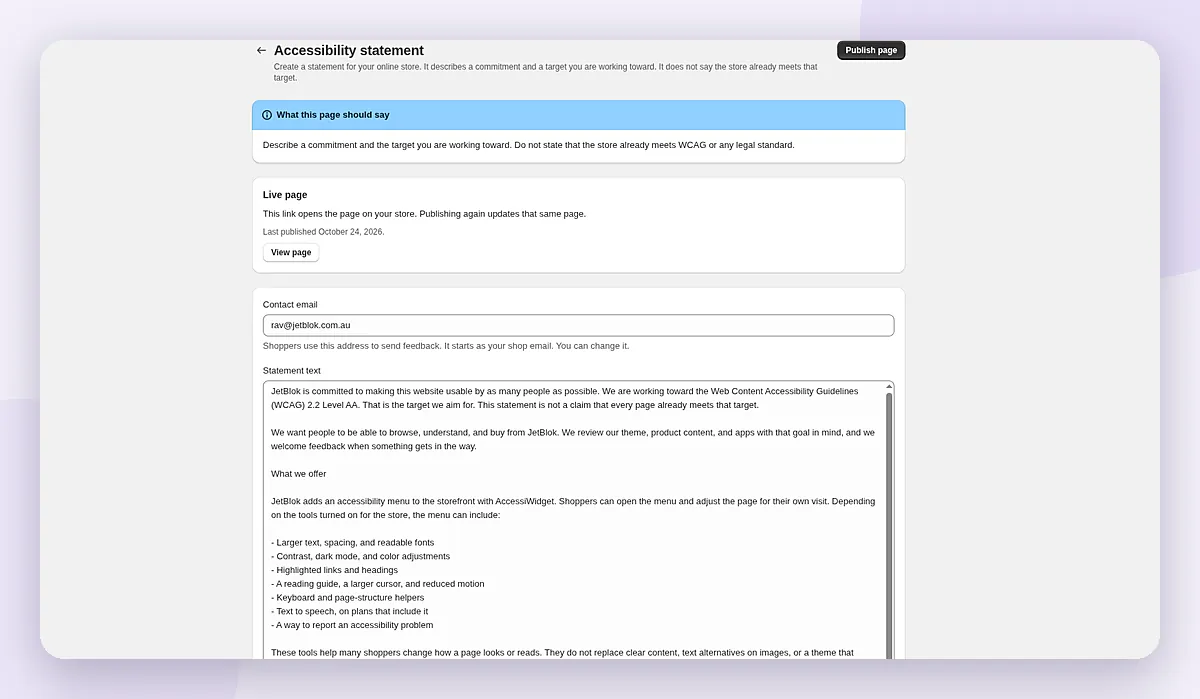
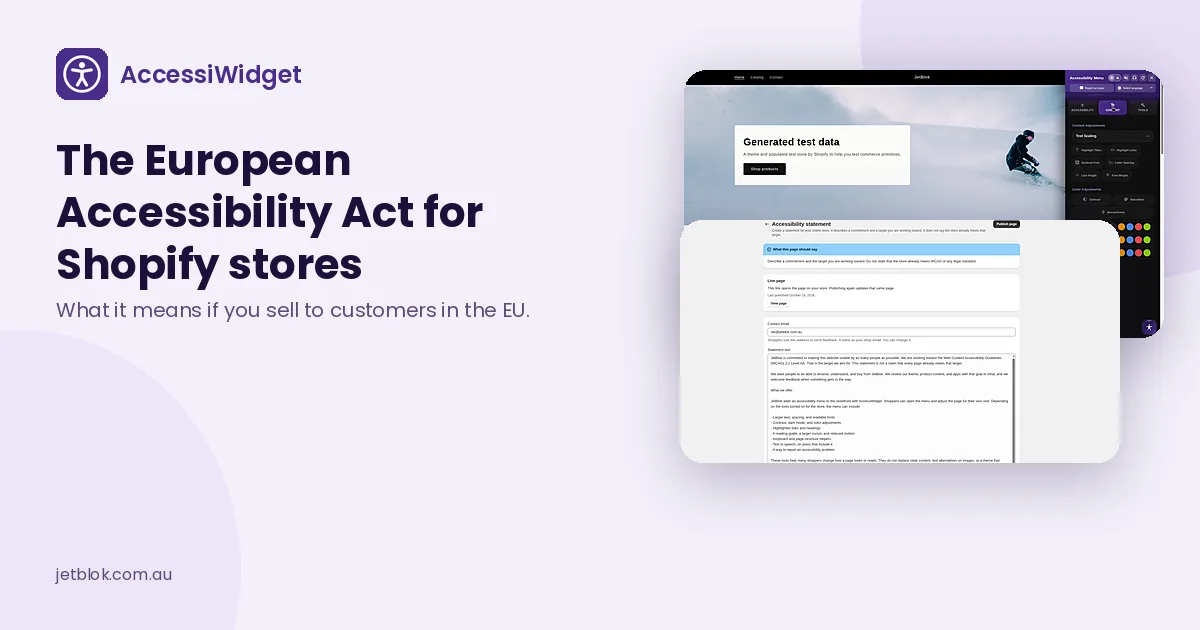
If you want help reducing barriers for shoppers, and a way to find common issues and publish a statement, AccessiWidget is our Shopify app. It is built around WCAG 2.2 guidelines and is there to help you work toward WCAG 2.2, ADA and the EAA. It does not make your store compliant, and it does not protect you from legal claims. You can also read our Shopify accessibility app guide or visit the AccessiWidget hub.
Frequently Asked Questions
Does the EAA apply if my Shopify store is not based in the EU?
It can. The directive defines a service provider as a person who provides a service on the Union market, or who makes offers to provide such a service to consumers in the Union. A store outside the EU that sells to customers in EU countries may be in scope. Get legal advice if you need a firm answer for your business.
What is the microenterprise exemption?
Microenterprises that provide services are exempt. In the directive, that means fewer than 10 people and annual turnover of no more than EUR 2 million, or a balance sheet total of no more than EUR 2 million. The "or" is between turnover and the balance sheet, not between staff numbers and money.
Does a widget or a store scan make a store meet the EAA?
No. A widget can reduce accessibility barriers, and a scan can find common issues. Neither one makes a store meet the EAA, and neither one protects you from legal claims. Theme markup, alt text, contrast, labels and a usable checkout still matter.
Which standard should I work toward?
The current harmonised reference is still EN 301 549 v3.2.1, built around WCAG 2.1 Level AA. EN 301 549 v4.1.1, which adopts WCAG 2.2, was published in September 2026 but has not yet been cited in the Official Journal. ACM already recommends working to WCAG 2.2 so you are not redoing work later.
Sources
- Directive (EU) 2019/882, EUR-Lex
- European Commission, European Accessibility Act
- Your Europe, digital accessibility
- ACM, e-commerce accessibility guidance
- ACM market check, 24 March 2026
- EN 301 549 V3.2.1, ETSI
- EN 301 549 V4.1.1, ETSI
- European Commission, Web Accessibility Directive standards
- AccessibleEU, EN 301 549 update, 7 September 2026
- MLBF (Germany)
- § 37 BFSG