

If there's ONE task to master in PTE, it's Write from Dictation (WFD). Pearson's score guide confirms it feeds both Listening and Writing, and coaches estimate it's about 23% of your Writing score and 13% of your Listening score, based on a weighting table they quote from Pearson. Get it right and you've locked in a big part of your result. For the full test overview, see the PTE Academic 2026 complete guide.
Quick Summary (click to expand)
- WFD: about 23% of Writing and 13% of Listening, by coach estimates
- Each correct word, spelled correctly, earns 1 point
- Phrase mapping: first letters, anchor words, rebuild straight away
- Spelling traps: necessary, government, accommodation, definitely
- Spot 4 common sentence patterns to help you rebuild
- Daily practice: at least 10 to 15 sentences
- Golden rule: partial credit adds up, so never give up on a sentence
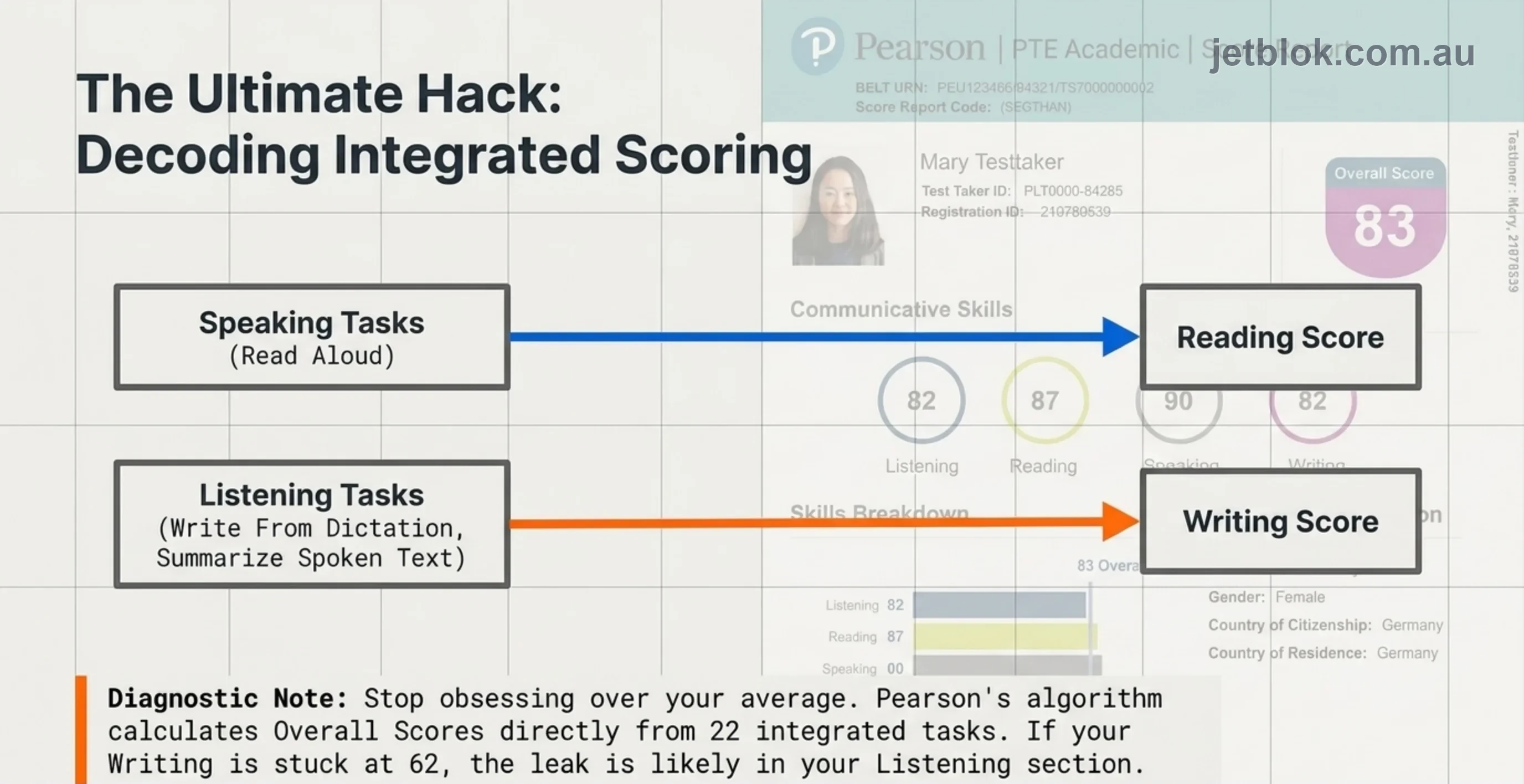
Why WFD Matters So Much
Do the maths:
- Pearson's score guide says you'll get 3 or 4 WFD sentences
- Each correctly spelled word earns 1 point
- Pearson says each sentence plays for just 3 to 5 seconds, and a typical sentence is about 10 to 14 words
- So there are roughly 35 to 50 points on offer across the test
Very few tasks give you that many chances to pick up points with nothing but listening and spelling.
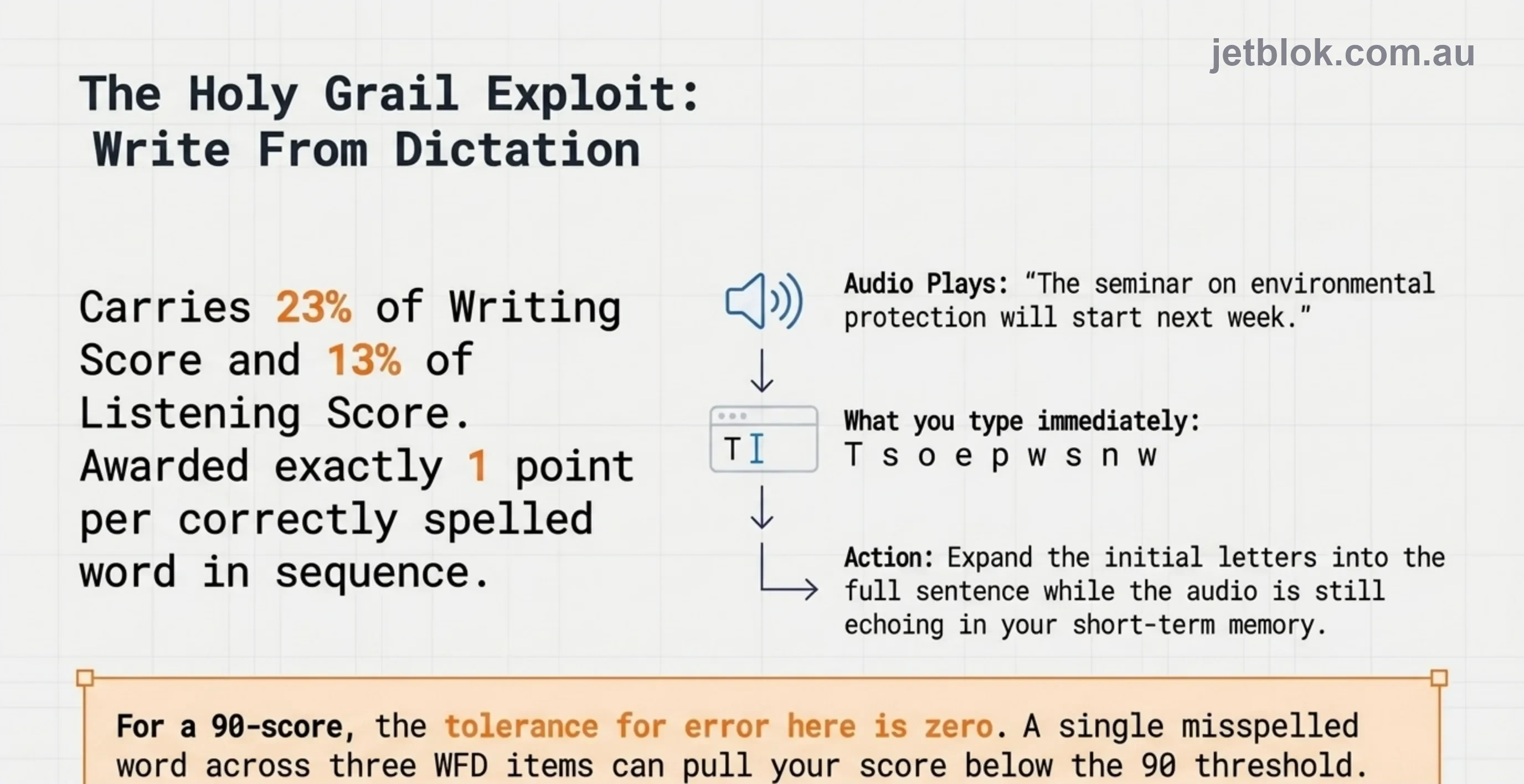
How WFD Is Scored
Pearson's rule is simple, and strict:
- Each correct word, spelled correctly, = 1 point
- A misspelled word = 0 for that word
- A missing word = 0 for that word
- Pearson doesn't take points off for extra words, but they earn nothing
- Pearson's scoring counts correctly spelled words. It doesn't mention capitals or punctuation, but many coaches (E2Language, Language Academy) still suggest a capital at the start and a full stop at the end, just to be safe
- Plurals, verb endings and sound-alikes are where most points go: "study" isn't "studies", and "affect" isn't "effect"
The Phrase Mapping Technique
You can't hold 12 words in your head by brute force. Phrase mapping uses your short-term memory much better.
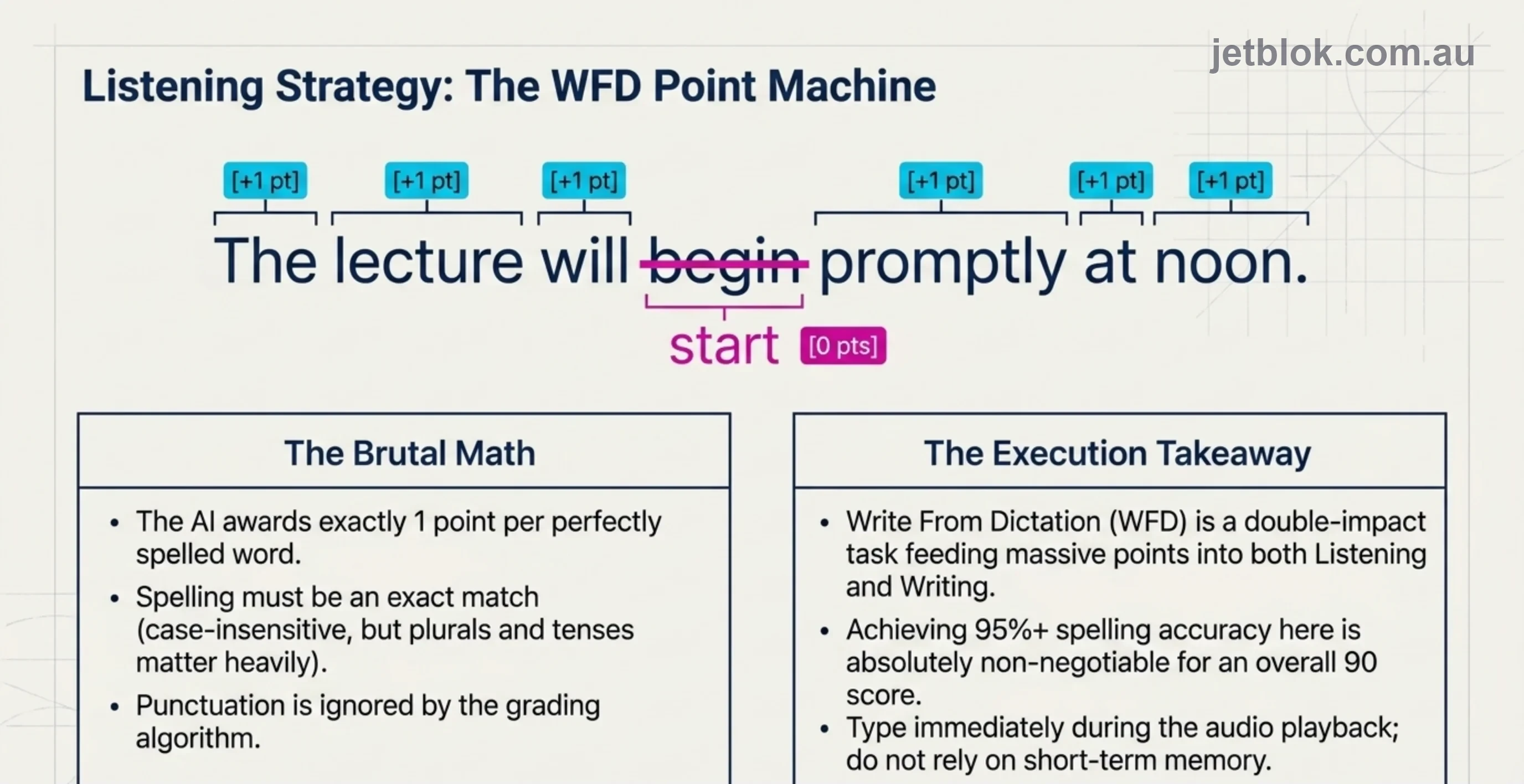
Step 1: First-letter capture
As you hear the sentence, jot down the first letter of each word:
Sentence: "The library will be closed for renovations next month" Notes: T l w b c f r n m
Step 2: Anchor words
While you're doing that, also note 2 or 3 anchor words: longer or unusual words that are easy to lose:
First letters: T l w b c f r n m Anchors: library, renovations
Step 3: Rebuild straight away
As soon as the audio stops, use your letters and anchors to rebuild the sentence:
- T = The
- l = library
- w = will
- b = be
- c = closed
- f = for
- r = renovations
- n = next
- m = month
Type it while it's still echoing in your head.
Common Spelling Traps
These words often get misspelled in WFD:
| Word | Common mistake | Correct spelling |
|---|---|---|
| necessary | neccessary | necessary |
| government | goverment | government |
| environment | enviroment | environment |
| immediately | immediatly | immediately |
| occurred | occured | occurred |
| successful | succesful | successful |
| accommodation | accomodation | accommodation |
| beginning | begining | beginning |
| definitely | definately | definitely |
| professional | proffesional | professional |
Sentence Patterns to Recognise
WFD sentences tend to follow familiar academic patterns. Spotting them helps you rebuild:
Pattern 1: Subject + verb + object
"Students must submit their assignments before the deadline."
Pattern 2: There is/are + noun
"There are several factors that contribute to climate change."
Pattern 3: It is + adjective + to + verb
"It is important to maintain a healthy work-life balance."
Pattern 4: The + noun + of + noun
"The purpose of this study is to examine student performance."
Practice Strategy
- Daily dictation: at least 10 to 15 sentences a day
- Use an AI-scored platform such as APEUni or PTE Tools for quick feedback
- Review your mistakes: keep a list of words you keep misspelling
- Type faster: you only get a short window after the audio ends
- Train your ear: academic podcasts, lectures and talks
Test Day Tips
- Check the volume before the Listening part starts
- Don't panic if you miss a word. Write what you have
- Check your spelling before you move on
- Use American OR British spelling and stick to one. Both are accepted
Frequently Asked Questions
How many Write from Dictation questions are in PTE?
Pearson's score guide says 3 or 4. They come at the very end of the Listening part.
Does Write from Dictation affect my Writing score?
Yes. Pearson lists it under Listening and Writing. Coaches estimate it's about 23% of Writing and 13% of Listening.
Are capital letters and punctuation marked in WFD?
Pearson scores each correctly spelled word and doesn't mention capitals or punctuation. Many coaches still suggest a capital at the start and a full stop at the end to be safe. Spelling, plurals and word endings definitely count.
The Golden Rule
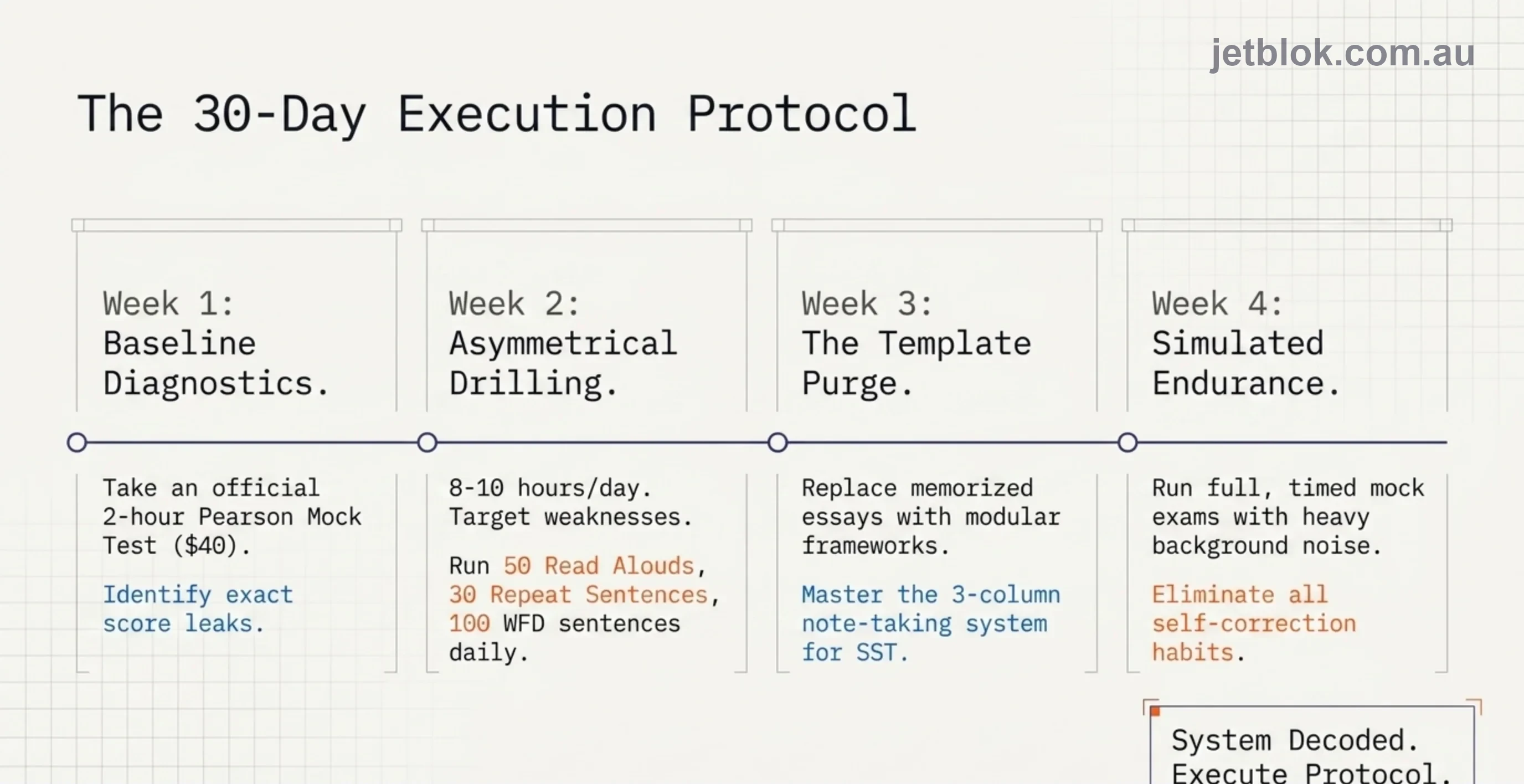
Every word counts. Getting 8 of 10 words right is far better than giving up because you missed 2. Partial credit adds up across all your WFD sentences.
Keep going:
- All 8 Listening tasks, including WFD: PTE Listening complete guide
- How WFD fits into your Writing score: PTE Writing guide
- Back to the hub: PTE Academic 2026 complete guide
- Traps to avoid: 10 Critical PTE Mistakes