

Some PTE mistakes look small but can cost you a lot of points. These are the ones I see most often, the ones coaches and teachers keep warning about, and the rules from Pearson's score guide that catch people out. Here's what to avoid and how to fix it. For the full test overview, start with the PTE Academic 2026 complete guide.
Quick Summary (click to expand)
- Memorised templates: Pearson can give zero for content
- Self-correcting in Speaking wrecks your fluency score
- 3 seconds of silence and the mic stops recording
- Essay under 120 or over 380 words = no points
- Don't guess on Highlight Incorrect Words: wrong clicks cost points
- Don't let Reorder Paragraphs eat your time
- Describe Image: trends, not a list of numbers
- Two-finger rule for your microphone
- The "good enough" mindset beats perfectionism

Mistake #1: Leaning on Templates
The problem: Using rigid, widely shared templates for Speaking and Writing.
Why it hurts: Pearson's score guide says an answer that relies heavily on pre-prepared or memorised material can get zero for content, and zero content means zero for the answer. Humans now review the content of the longer speaking and writing tasks too. Coaches often say the engine "flags rhythmic monotony". Pearson doesn't use that phrase, but the risk is real.
The fix: Learn frameworks, not scripts. Know the structure (introduction, body, conclusion) and change the words each time. Practise saying the same idea several ways.
Mistake #2: Correcting Yourself While Speaking
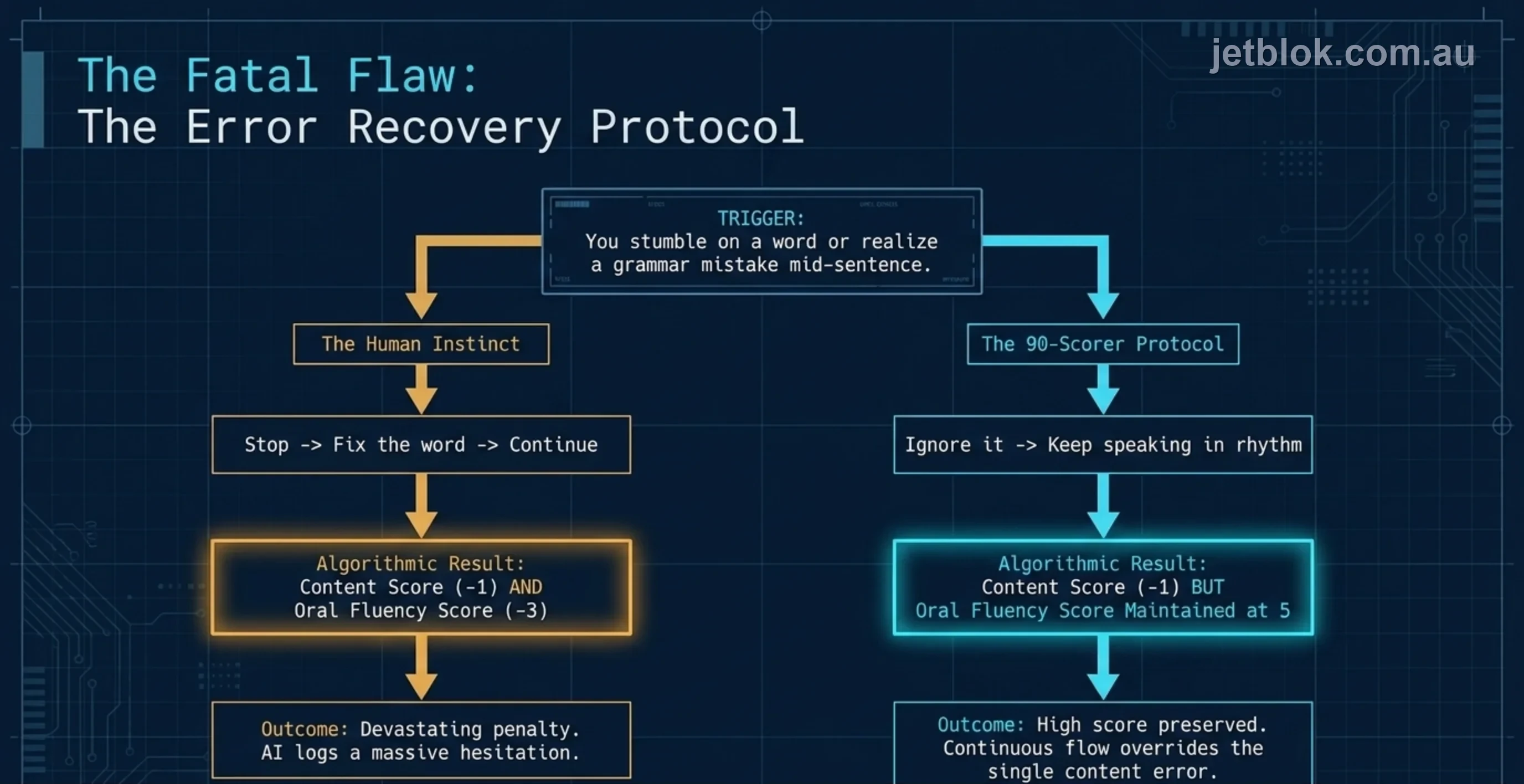
The problem: Stopping mid-sentence to fix a word or a sound.
Why it hurts: Restarts and hesitations pull down your oral fluency score. Pearson's fluency scale rewards smooth phrasing and marks down hesitations, repeats and false starts.
The fix: Keep going. If you say "The student... the students are...", just carry on. A smooth answer with a small slip usually beats a choppy "correct" one.
Mistake #3: Going Silent for 3 Seconds
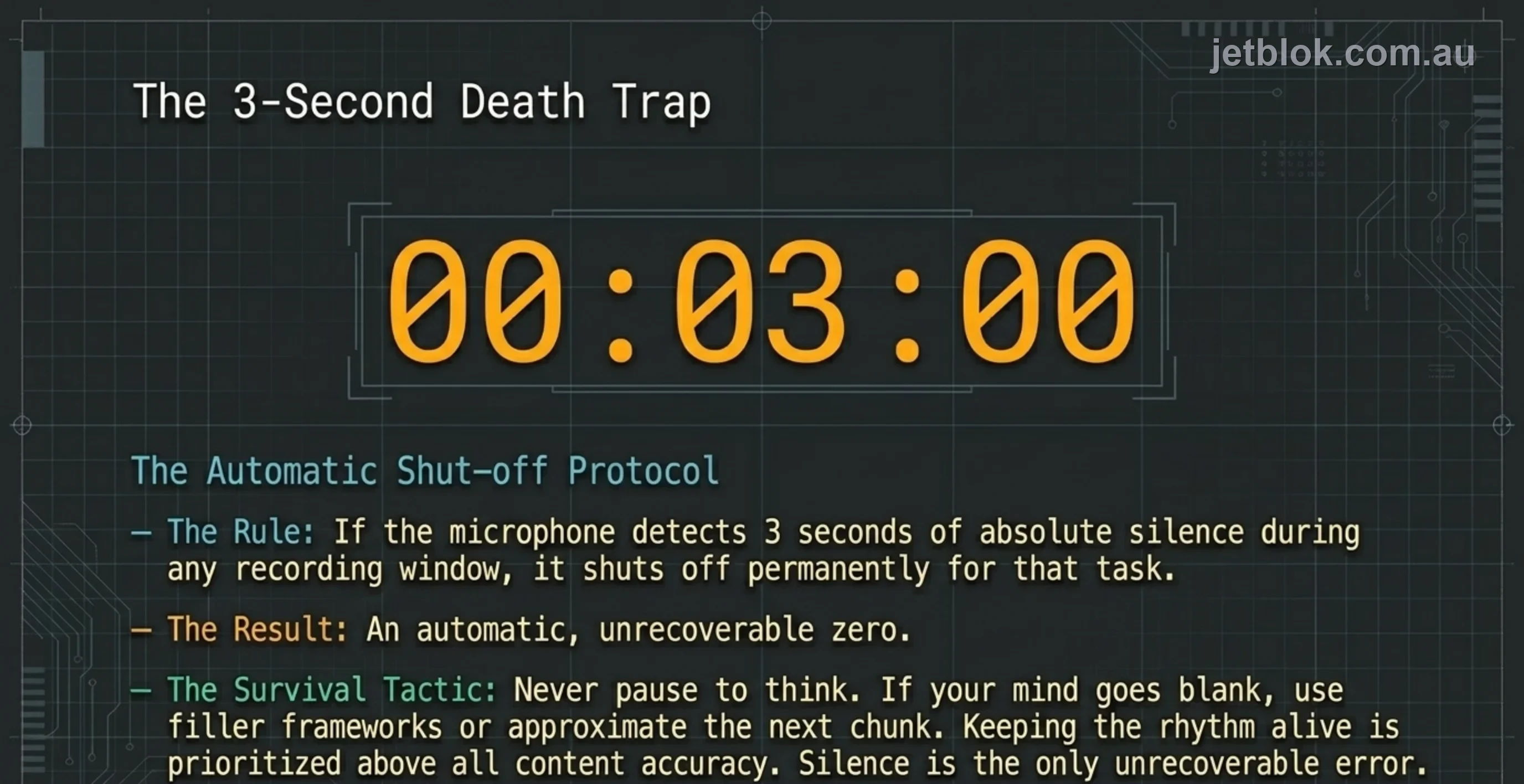
The problem: Pausing for 3 seconds or more in a speaking task.
Why it hurts: After about 3 seconds of silence, the microphone stops recording. Whatever you meant to say next isn't captured. If you hadn't started yet, you get nothing for that item. What you already said is still scored, but you've likely lost content and fluency marks.
The fix: Have a few linking phrases ready: "Also...", "On top of that...", "Another point is...". Keep sound coming, even while you think.
Mistake #4: Getting the Essay Word Count Wrong
The problem: Writing fewer than 120 or more than 380 words.
Why it hurts: Pearson gives zero for form under 120 or over 380 words, and says a zero for form means no points for the essay, however good the content. Between 120 and 199, or 301 and 380, you only get part of the form marks.
The fix: Aim for 200 to 300 words every time (many coaches suggest about 270 to 290). Count words in practice until you can judge length by eye.
Mistake #5: Getting SWT Wrong
The problem: A Summarize Written Text answer outside 5 to 75 words, or written as more than one sentence.
Why it hurts: Pearson gives zero for form, which means no points for the answer. Coaches suggest 35 to 55 words as the sweet spot.
The fix: Aim for about 40 to 50 words. Always write ONE sentence (no full stop in the middle). Join ideas with linking words and "which" or "while" clauses.
Mistake #6: Miscounting Summarize Spoken Text
The problem: Landing just outside 50 to 70 words.
Why it hurts: Pearson gives full form marks for 50 to 70 words. At 40 to 49 or 71 to 100 you drop to part marks for form. Under 40 or over 100 is zero for form, and so no points.
The fix: Aim for 55 to 65 words for a safe buffer. Count before you submit.
Mistake #7: Guessing on Highlight Incorrect Words
The problem: Clicking words you're not sure about.
Why it hurts: Pearson uses negative marking here: each wrong click takes off a point (the item can't go below zero). The same goes for Multiple Choice, Multiple Answers in Reading and Listening.
The fix: Only click words you're sure are different. If in doubt, leave it.
Mistake #8: Spending Too Long on Reorder Paragraphs
The problem: Burning 5+ minutes trying to get the order perfect.
Why it hurts: Coaches estimate Reorder is only about 9% of Reading, while the two Fill in the Blanks tasks are about 45%. Time lost on Reorder is time stolen from the FIBs.
The fix: Coaches suggest a cap of about 90 seconds to 2 minutes. Find one sure pair, make your best guess on the rest and move on. More in my PTE Reading guide.
Mistake #9: Reading Out Numbers Instead of Trends (Describe Image)
The problem: Listing every number: "In 2010 it was 23%, in 2011 it was 24%, in 2012..."
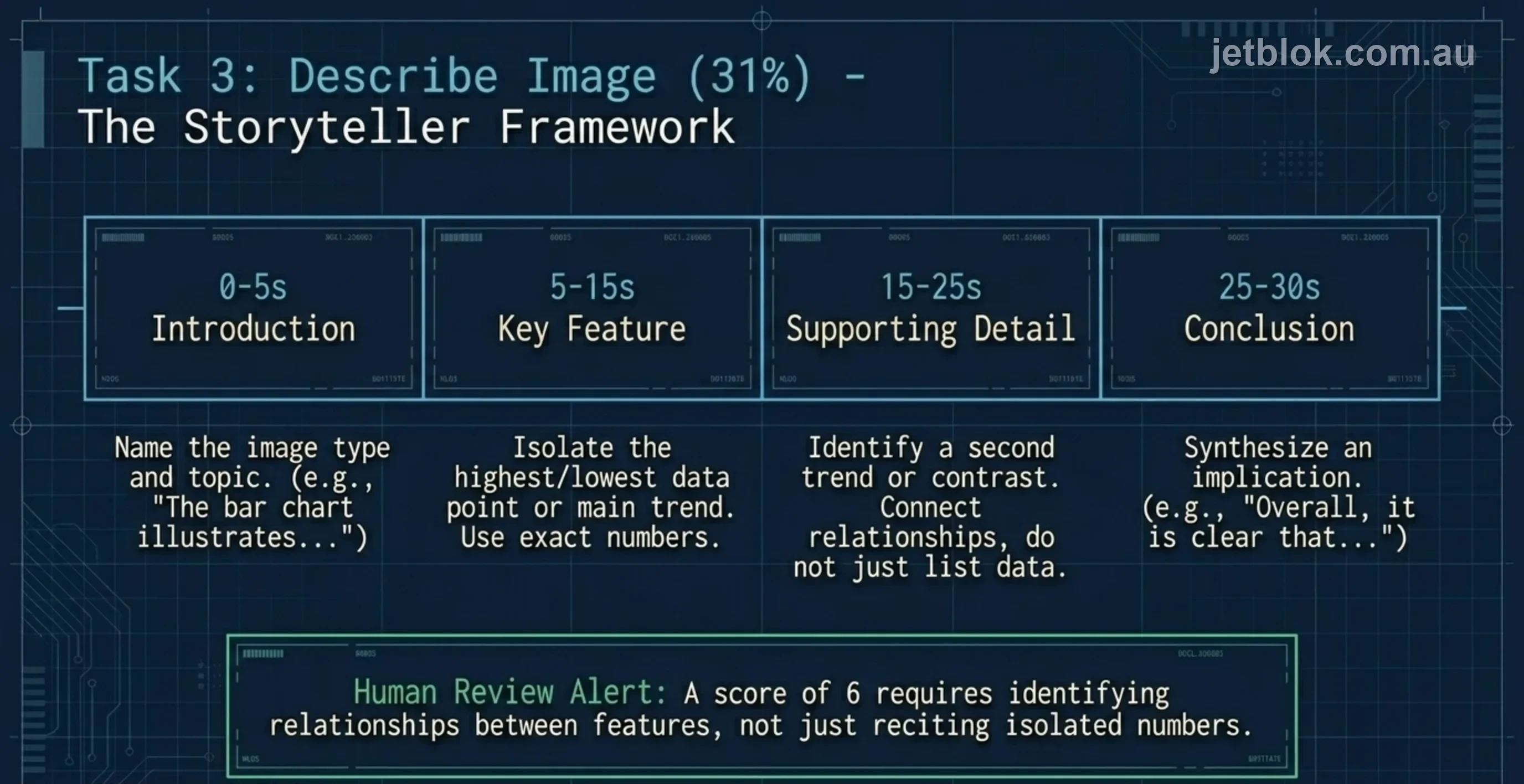
Why it hurts: You burn time on low-value detail and run out before you say anything meaningful. Pearson's top content score asks you to describe the main features and how they relate.
The fix: Describe trends and relationships: "There was a steady rise of about 15% over five years, with the biggest jump between 2013 and 2014." More in my PTE Speaking guide.
Mistake #10: Bad Microphone Position
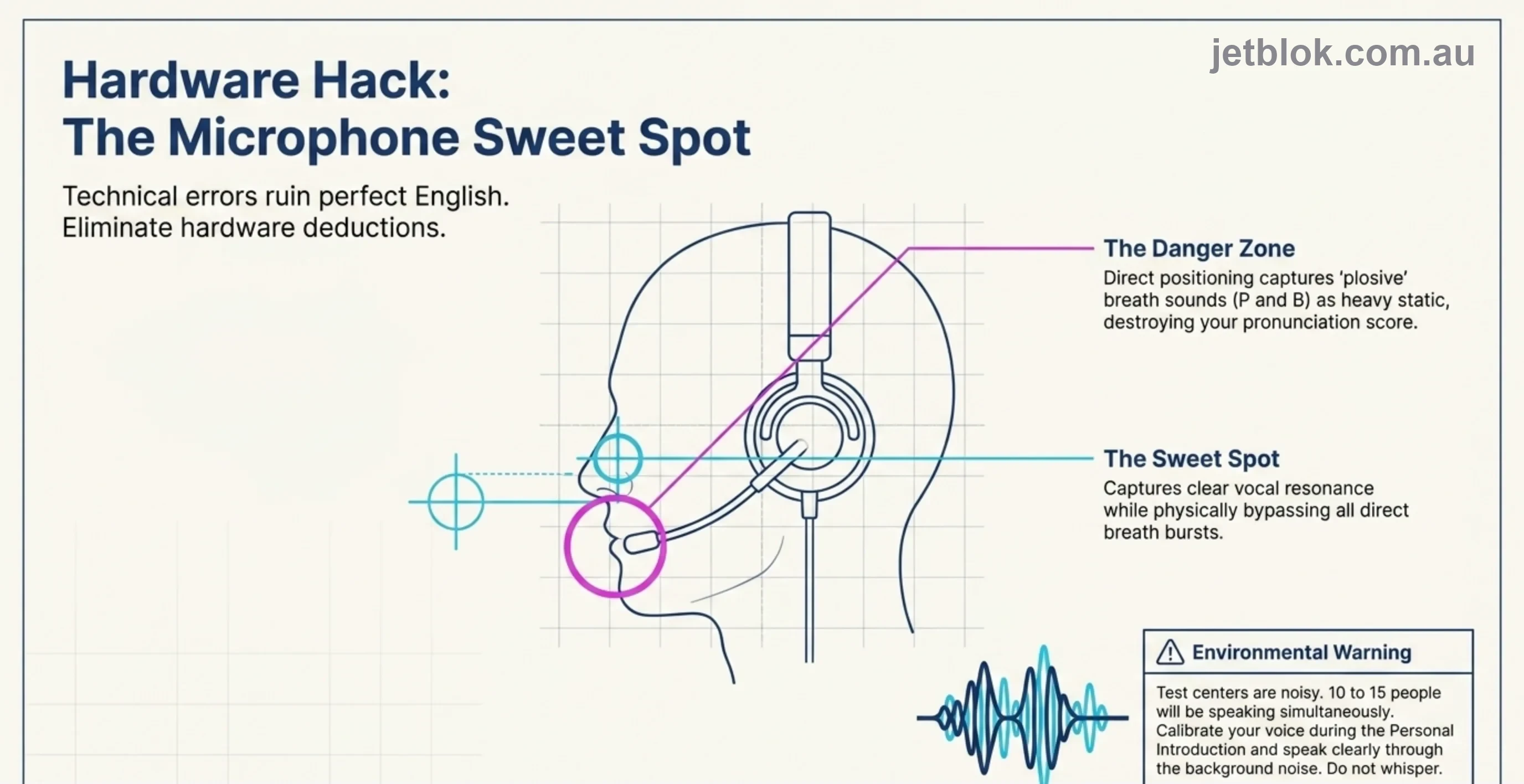
The problem: The mic is too close to your mouth or at the wrong angle.
Why it hurts: Breath bursts on P, B and T sounds make you harder to understand, and breathing noise can interrupt the flow.
The fix: Put the mic about level with your nose or chin, slightly to the side, about two fingers' width from your face.
Bonus: The Mindset Mistake
The problem: Perfectionism and panic.
Why it hurts: People chasing perfection freeze, correct themselves or sink too long into hard questions. People who panic after one mistake let it spill into the next tasks.
The fix: Go for "good enough". A smooth 85 beats a 90 you never reach because you kept stopping. Move on, stay calm and trust your practice.
Quick Reference: Score-Killing Thresholds
From Pearson's score guide:
| Task | What goes wrong |
|---|---|
| Speaking tasks | About 3 seconds of silence: the mic stops recording |
| Essay | Under 120 or over 380 words: no points |
| SWT | Under 5 or over 75 words, or more than one sentence: no points |
| SST | Under 40 or over 100 words: no points. 40 to 49 or 71 to 100: part form marks only |
| HIW and Multiple Answers | Each wrong pick: minus 1 point |
Frequently Asked Questions
What happens if I'm silent for 3 seconds in PTE Speaking?
The microphone stops recording. What you've already said is still scored, but nothing after that is captured, and if you hadn't started speaking you score nothing for that item.
What is the minimum word count for the PTE essay?
120 words to avoid a zero for form, but you only get full form marks from 200 to 300 words. Over 380 words also scores zero for form.
Which PTE tasks have negative marking?
Multiple Choice, Multiple Answers in Reading, Multiple Choice, Multiple Answers in Listening, and Highlight Incorrect Words. A wrong pick costs a point, but no item goes below zero.
Are PTE templates banned?
Not banned, but risky. Pearson's score guide says answers that rely heavily on memorised material can get zero for content. A loose structure in your own words is fine.
Keep Going
Avoid these and you're already ahead of most people. Now build the good habits: